Physician Collaboration
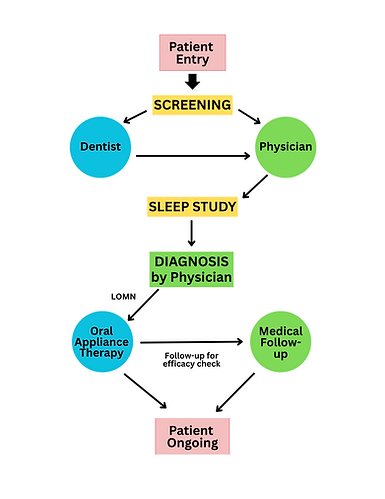
Untreated obstructive sleep apnea (OSA) remains a widespread, underdiagnosed condition with major health implications, yet effective interdisciplinary management is achievable. Oral Appliance Therapy (OAT), delivered by qualified dentists collaborating closely with medical providers, offers a proven, non-invasive, and cost-effective alternative or complement to CPAP—delivering high patient adherence and clinical outcomes equivalent to CPAP for many measures. Incorporating streamlined screening during dental visits, direct referral for diagnosis, and regular coordinated follow-up ensures that more patients are identified, treated, and retained—improving both quality of care and long-term health outcomes for adults suffering from OSA.
OSA is Common and Underdiagnosed
-
Up to 80% of obstructive sleep apnea cases are undiagnosed.
-
Untreated OSA increases risk for diabetes, cardiovascular disease, cognitive decline, stroke, cancer, and mortality.
Oral Appliance Therapy (OAT): Clinical Highlights
-
Custom appliances, worn during sleep, keep the airway open by advancing the jaw.
-
Indicated for OSA and primary snoring, especially for patients intolerant of or unresponsive to CPAP.
-
Can be used alone, with CPAP, or in multi-modal therapy including surgery or oxygen.
-
In studies: 64% have >50% reduction in AHI; 37% achieve normalization; comparable outcomes to CPAP for many clinical measures.
-
Over 90% patient adherence—often better than CPAP due to comfort and convenience.
-
More cost-effective than CPAP; may be covered as medical equipment by insurance.
Role of Qualified Dentists
-
Must have advanced sleep medicine training, licensing, and appropriate insurance.
-
Screen patients, provide education, fit and calibrate appliances, monitor for side effects, and support ongoing adherence.
-
Do not diagnose OSA; collaborate directly with medical providers for diagnosis and ongoing care.
Collaboration Essentials
-
Interdisciplinary model: provider and dentist communicate directly and coordinate care, not just via the patient.
-
Clear roles, defined responsibilities, and routine updates ensure patient engagement and effective therapy.
-
Screening in dental settings increases patient capture; regular follow-up and bidirectional communication prevent care gaps.
Takeaway for Physicians
-
Oral appliance therapy works for mild, moderate, and severe OSA—often as well as CPAP.
-
Minor and temporary side effects; benefit from early recognition by qualified dentists.
-
Coordinated care supports diagnosis, treatment, re-engagement, and optimal patient outcomes.